Helpful guide
How to Sort Hurricane Debris Safely Before Pickup
A category-by-category staging guide for yard waste, appliances, construction debris and hazardous materials.
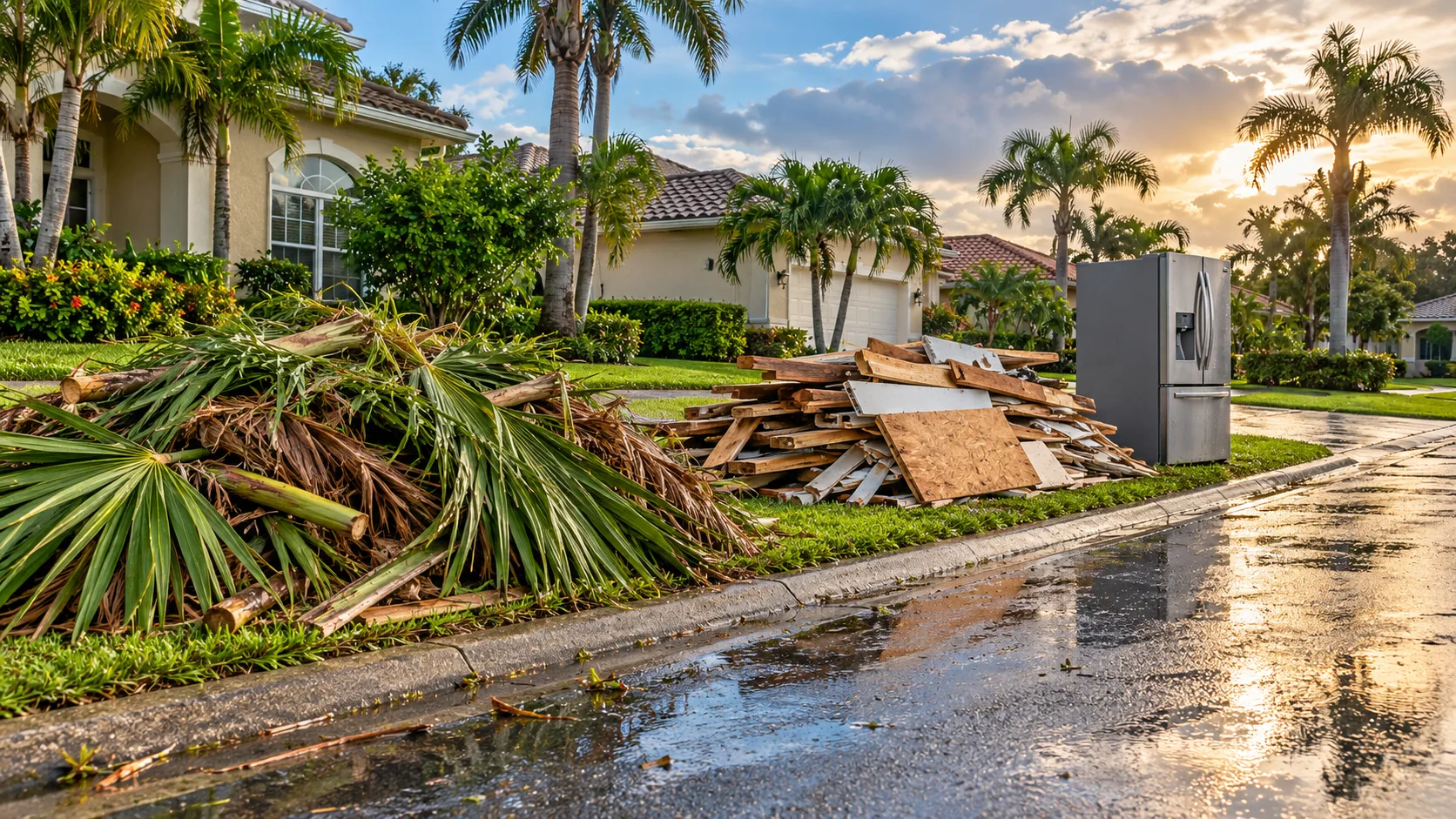
Wait for officials to say it is safe to return, then separate debris by type. Mixed piles slow collection and can put hazardous material, appliances and ordinary garbage on the wrong route.
Use separate piles
| Pile | Examples | Keep out |
|---|---|---|
| Vegetative debris | Branches, palm fronds, leaves | Plastic bags, lumber, fencing |
| Construction debris | Drywall, lumber, flooring, damaged fixtures | Chemicals and appliances |
| White goods | Refrigerators, ranges, washers | Food and loose household waste |
| Household hazardous waste | Fuel, paint, pool chemicals, pesticides | Every curbside debris pile |
Lee County’s disaster guidance says white goods should be set apart from other debris and household chemical waste should go through the county’s designated facility or announced program. Rules can change with each storm, so current county notices outrank any standing checklist.
Safety comes before sorting
- Do not enter a building until it is safe.
- Avoid floodwater and any area near damaged electrical equipment.
- Wear heavy gloves, protective footwear and appropriate eye or respiratory protection.
- Do not ask children to help with disaster cleanup.
- Stop if a pile may contain asbestos, chemicals, biohazards or unstable structural material.
Ready.gov notes that floodwater can contain sewage, chemicals, broken glass and other hazards. Professional assessment is appropriate when contamination, structural damage or electrical risk is possible.
Sources: Lee County Hurricane & Disaster Debris Management and Ready.gov flood cleanup safety. Lee County and federal safety guidance; retrieved October 21, 2026.
Need help with the lifting? See our related service, browse items we take, or request a quote.


